
www.fasznews.com -
Malang, Indonesia –Faculty of Social and Political Sciences (FISIP), Universitas
Brawijaya (UB), together with academic partners from Malaysia, has reinforced
its commitment to building digitally resilient communities through an
international digital literacy workshop in Ngabab Village, Pujon District,
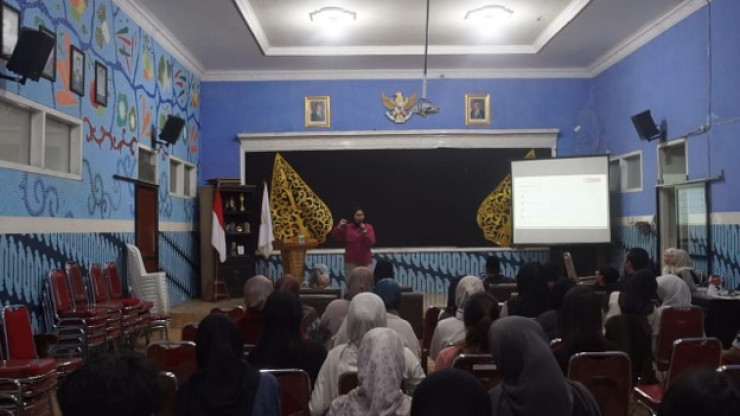
Malang Regency. The programme brought together educators, village officials,
and community representatives to explore practical strategies for navigating
the opportunities and challenges of today's rapidly evolving digital landscape.
Held
on 22 July 2026 at the Ngabab Village Office, the workshop
welcomed 50 participants,
including village officials, school principals, kindergarten and primary school
teachers, and members of the local community. The activity formed part of the
implementation of FISIP UB's international partnership with Universiti Putra Malaysia (UPM), Universiti
Teknologi MARA (UiTM), and Universiti Malaya (UM) through the FISIP Bakti Desa International Community
Engagement Programme.
The international community engagement
initiative was led by Dr. Muhamad Shamsul Ibrahim of Universiti Malaya,
reflecting the University's commitment to fostering cross-border academic
collaboration that creates meaningful social impact while strengthening
partnerships between higher education institutions and local communities. The workshop featured Dr. Ima Liana Esa from Universiti
Teknologi MARA (UiTM), Dr. Nur
Izzati Aziz, and Dr. Nur Hannan
Mohd Jaafar from Universiti
Malaya (UM). The speakers discussed the growing importance of digital literacy
in helping communities critically evaluate online information, promote
responsible digital communication, and prepare younger generations for an
increasingly interconnected society.
"Digital literacy is no longer an optional
skill it is a fundamental competency for every community. Beyond knowing how to
use digital technology, people need the ability to evaluate information
critically, communicate responsibly, and adapt confidently to continuous
technological change,"
said Dr. Ima Liana Esa.
Dr.
Nur Izzati Aziz added that schools and local communities play complementary
roles in fostering responsible digital behaviour. "Developing digitally responsible communities begins with
collaboration between educators, families, and local institutions. Digital
literacy empowers citizens not only to access information but also to
contribute positively to society while protecting themselves from
misinformation and online risks," she said on behalf of the
Malaysian academic team.
According
to Novy Setia Yunas, Field
Supervisor of the FISIP Bakti Desa Programme and Expert Staff to the Vice Dean
for Academic Affairs of FISIP UB, the programme demonstrates how international
partnerships can generate mutual learning while responding to the real needs of
local communities. "This
collaboration represents more than academic cooperation between Indonesian and
Malaysian universities. It serves as a platform for cultural immersion where
academics and students learn directly from local communities while sharing
knowledge and global perspectives. At the same time, digital literacy has
become an essential foundation for communities like Ngabab to strengthen their
resilience and maximise local opportunities in tourism, agriculture, education,
and the creative economy."
Yunas
noted that Ngabab and the wider Pujon area possess significant potential as
rural tourism destinations, supported by community-based enterprises and
cultural attractions such as the Dworowati
Lantern Festival. Strengthening digital literacy, he explained, enables
local communities to communicate these unique assets more effectively, expand
digital engagement, and participate more confidently in the digital economy
while remaining resilient against misinformation and other online challenges.
The
programme also provided an immersive intercultural learning experience for 11 students from Universiti Putra Malaysia, Universiti
Teknologi MARA, and Universiti Malaya, who joined Universitas Brawijaya
students in working with local communities across Ngabab, Ngroto and Pandesari
villages. Through direct engagement with village life, participants gained
valuable insights into Indonesia's community development practices while
fostering cross cultural understanding and long-term academic collaboration.
The
initiative reflects the shared commitment of Universitas Brawijaya, Universiti Putra Malaysia, Universiti Teknologi
MARA, and Universiti Malaya to advancing sustainable community
development through international partnership. By integrating digital literacy,
intercultural exchange, and community engagement, the programme contributes to
the United Nations Sustainable
Development Goals, particularly SDG
4 (Quality Education), SDG 11 (Sustainable Cities and Communities), SDG 16
(Peace, Justice and Strong Institutions) and SDG 17 (Partnerships for the
Goals).